FlexSmart brands itself as an academy first and a deployment tool second. That positioning tells you a lot about what you are getting. If you want to learn what a smart contract is, FlexSmart might help. If you want to build and ship one, you need a different tool.
What does FlexSmart offer?
FlexSmart provides interactive “no-code labs” where you learn blockchain concepts and deploy simple contracts along the way. It supports a range of template contract types: ERC-20, BEP-20, ERC-777, ERC-721, ERC-1155, Soulbound tokens, Escrow, and others. You select a type, configure parameters, and deploy. The platform also offers NFT certifications for completing courses.
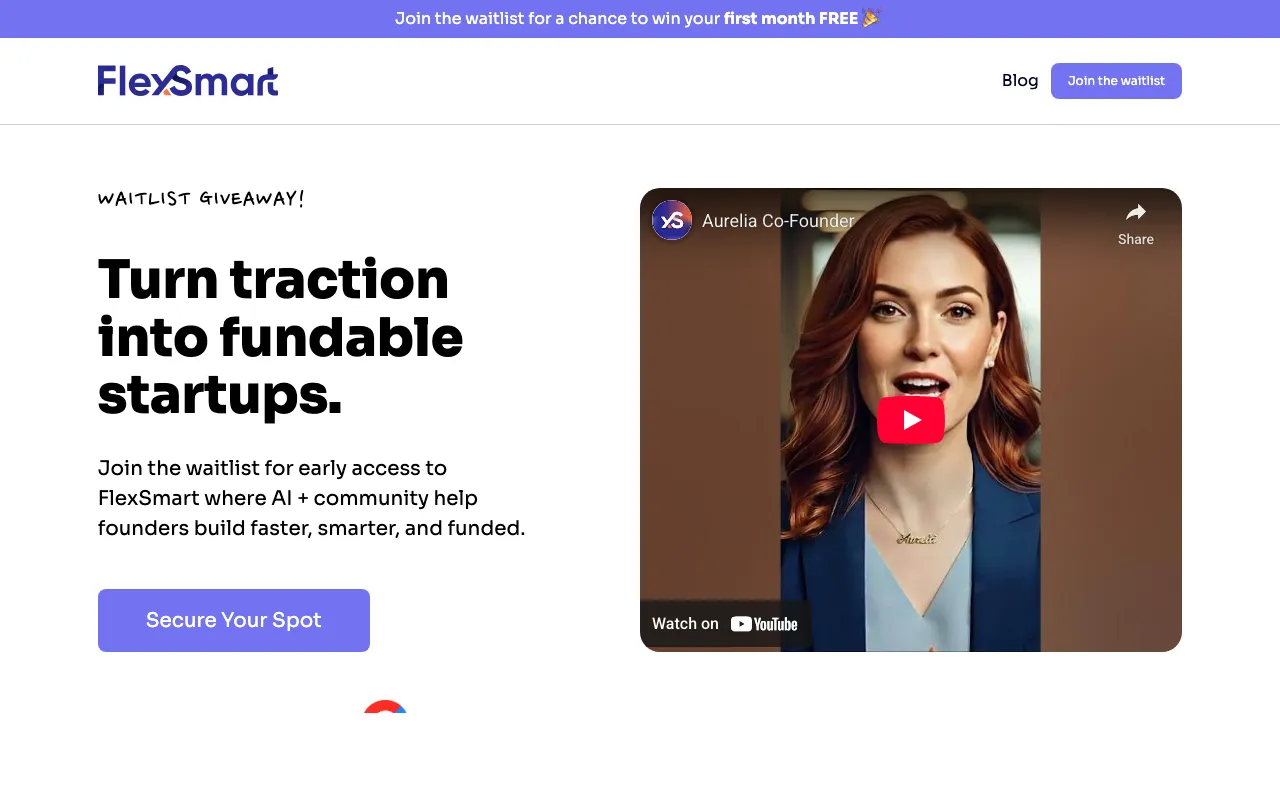
The parent company (FlexSmart.io) mentions an “AI Co-Founder” feature, but this appears to be for general business building rather than contract development.
Where does FlexSmart fall short?
- Education, not production. FlexSmart is designed for learning, not shipping. The contracts are basic, the tooling is minimal, and there is no path from “I completed the lab” to “I have a production contract.”
- Template-only contract types. FlexSmart supports a dozen or so contract types including ERC-20, BEP-20, ERC-777, ERC-721 NFTs, ERC-1155, Soulbound tokens, and others. But each type is a fixed template. No governance logic, no staking mechanics, no custom logic of any kind.
- Template-only. You fill in form fields and deploy. There is no builder, no visual representation, no way to customize behavior beyond the predefined parameters.
- Opaque pricing. No public pricing information. You cannot evaluate the cost before engaging with the platform.
- No testing. No simulation, no debugging, no way to verify contract behavior before deployment.
- No AI for contracts. The AI features are focused on business building, not smart contract creation or modification.
- Limited documentation. Sparse web presence and limited community resources make it difficult to evaluate the platform’s capabilities or get help when stuck.
How does Doodledapp compare to FlexSmart?
| FlexSmart | Doodledapp | |
|---|---|---|
| Primary purpose | Education / learning labs | Production contract building |
| Contract types | 12+ templates | Any Solidity logic |
| Custom logic | Not possible | Full visual builder |
| Visual builder | None | Node-based editor |
| AI assistant | None (for contracts) | Plain English modifications |
| Testing | None | Visual step-through debugging |
| Code output | Template-generated | Standard Solidity you own |
| Pricing | Undisclosed | Free tier, transparent plans |
When does FlexSmart make sense?
FlexSmart serves a narrow educational purpose. If you are completely new to blockchain and want a guided introduction to what tokens and smart contracts are, the interactive labs provide a structured learning path. The NFT certifications can also serve as credentials for people building a portfolio in the web3 space.
For anyone beyond the beginner stage, FlexSmart’s limitations become apparent quickly. A dozen template types with no custom logic and no testing means you will need a different tool the moment your requirements move beyond what the templates anticipated.
What is the difference between learning and building?
The distinction matters because it affects your product timeline. Learning tools teach you concepts. Building tools help you ship.
FlexSmart teaches you what an ERC-20 token is. Doodledapp helps you build one with the specific logic your project needs.
Consider a practical example: you want a token with a 2% tax on transfers that funds a community treasury. FlexSmart cannot express this because it is not one of the four template types. In Doodledapp, you would add a Math node to calculate the tax, a Transfer node to send the fee to the treasury address, and a Set Variable node to adjust the transfer amount. The visual flow makes the logic clear, and the step-through test runner lets you verify that the tax calculation works correctly before deploying.
This is not a criticism of education. Understanding blockchain fundamentals has value. But if you are a founder with a product to ship, you need a tool that grows with your requirements, not one that caps out at predefined templates.
The bottom line
FlexSmart is fine as a learning tool for blockchain beginners. If you want to understand what an ERC-20 token is and deploy a basic one as a learning exercise, it serves that purpose. But there is a wide gap between deploying a lab exercise and shipping a real contract. Doodledapp bridges that gap by giving you a visual builder where you can create any Solidity logic, test it thoroughly, and deploy to production with confidence.